Der Dorfladen
A play about the course of things
Credits
With: Peter Jecklin & Barbara Schneider
Concept, interviews and direction: Roman Weishaupt
Text: Tim Krohn · Musical direction: Remo Derungs
Projection: Ester Vonplon · Design: Remo Arpagaus & Gianina Flepp
Dramaturgy: Ann-Marie Arioli · Lighting design: Roger Stieger
Assistant director: Marina Blumenthal · Production management: PURPUR – Anita Willi & Brigitte Balzer
Village musicians: Désirée Albin, Ursin Arpagaus, Sandro Deplazes, Remo Derungs, Ursin Derungs & Liana Pirovino
A production by KOLLEKTIV DER BERGE in co-production with Theater Chur.
World premiere, 28 January 2017 · Theater Chur
2017 · Concept and director
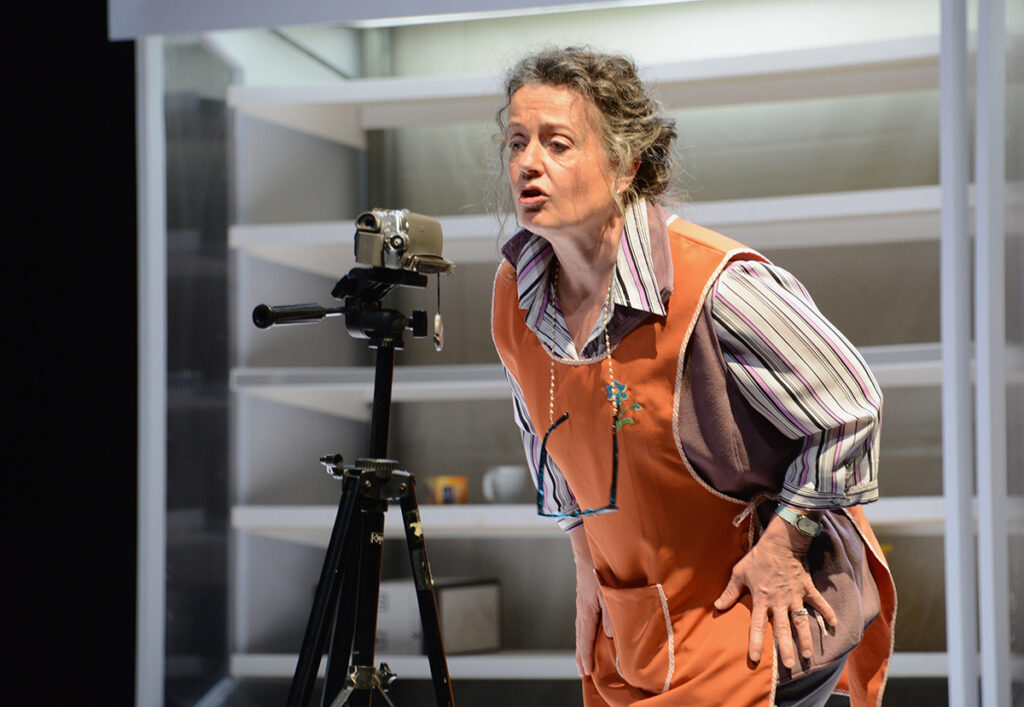
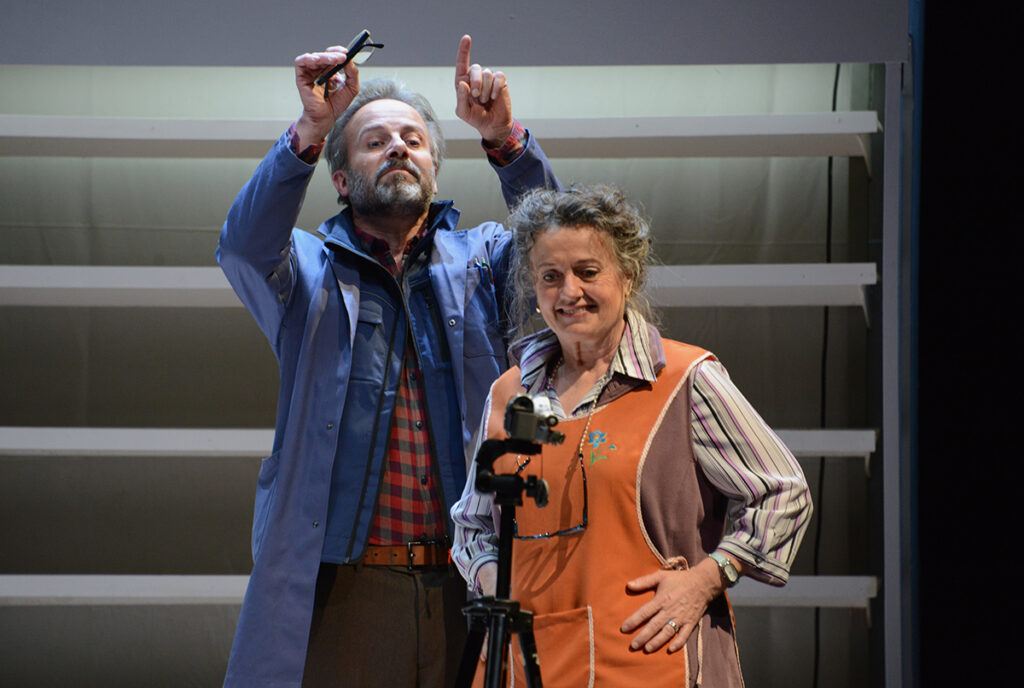
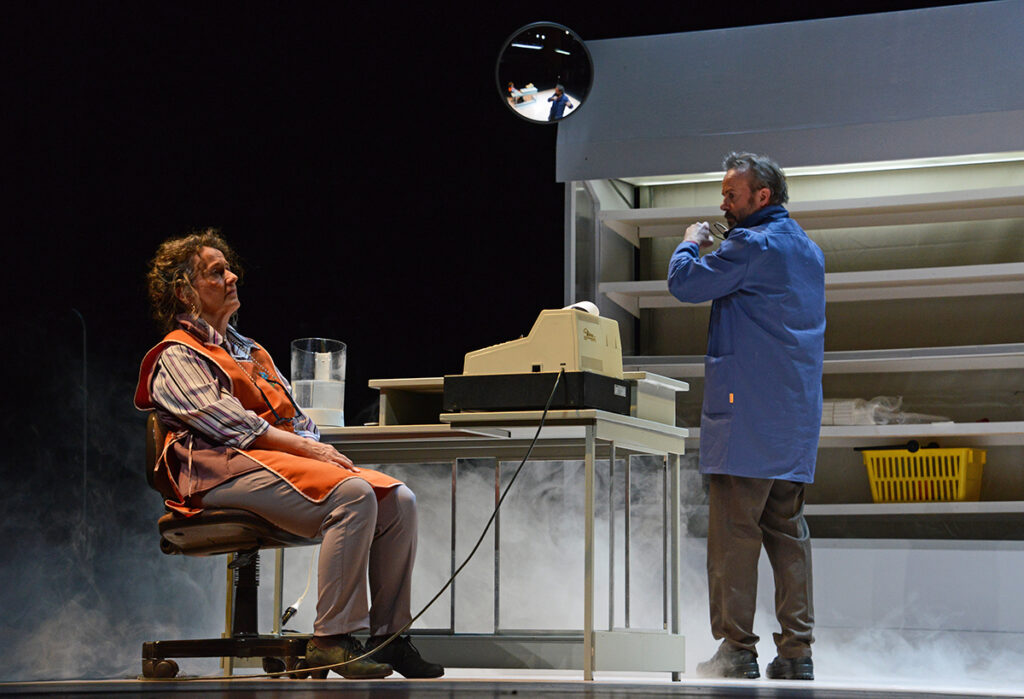
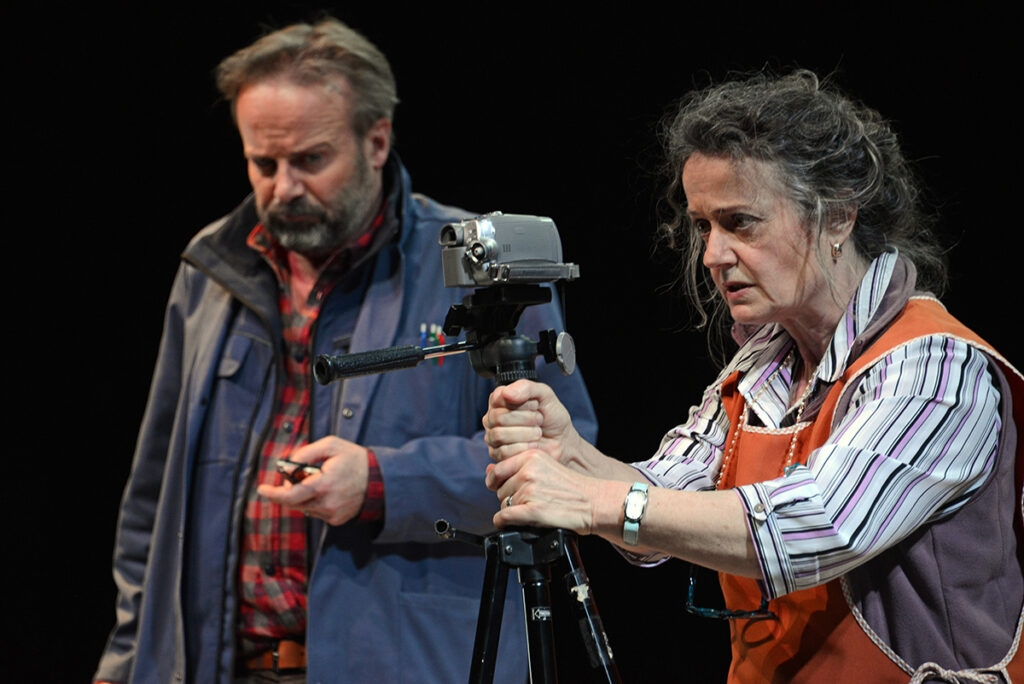
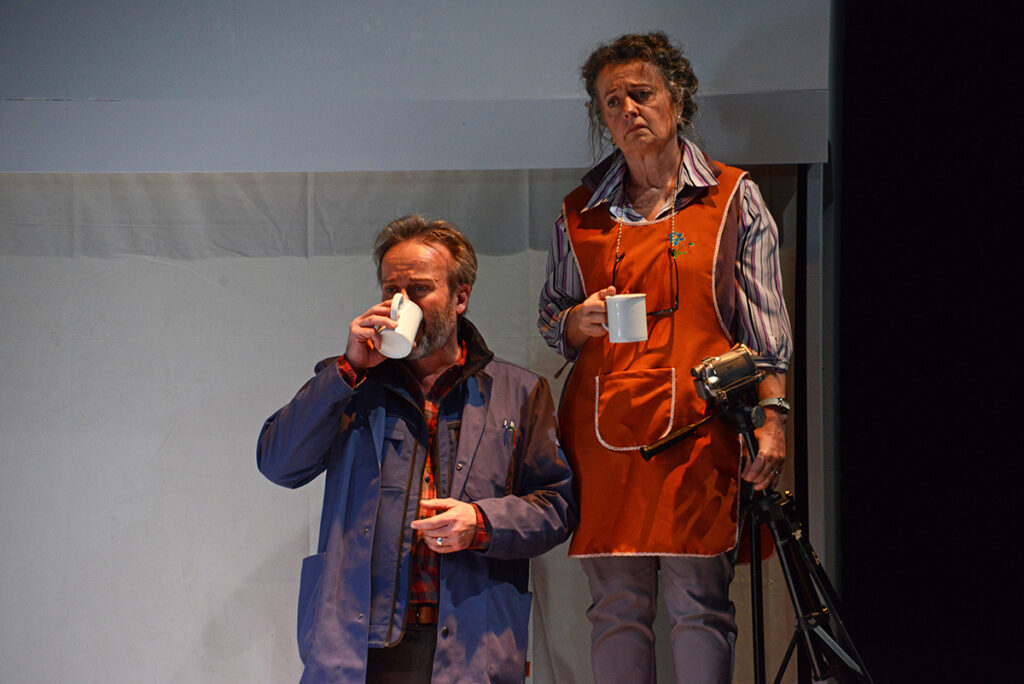
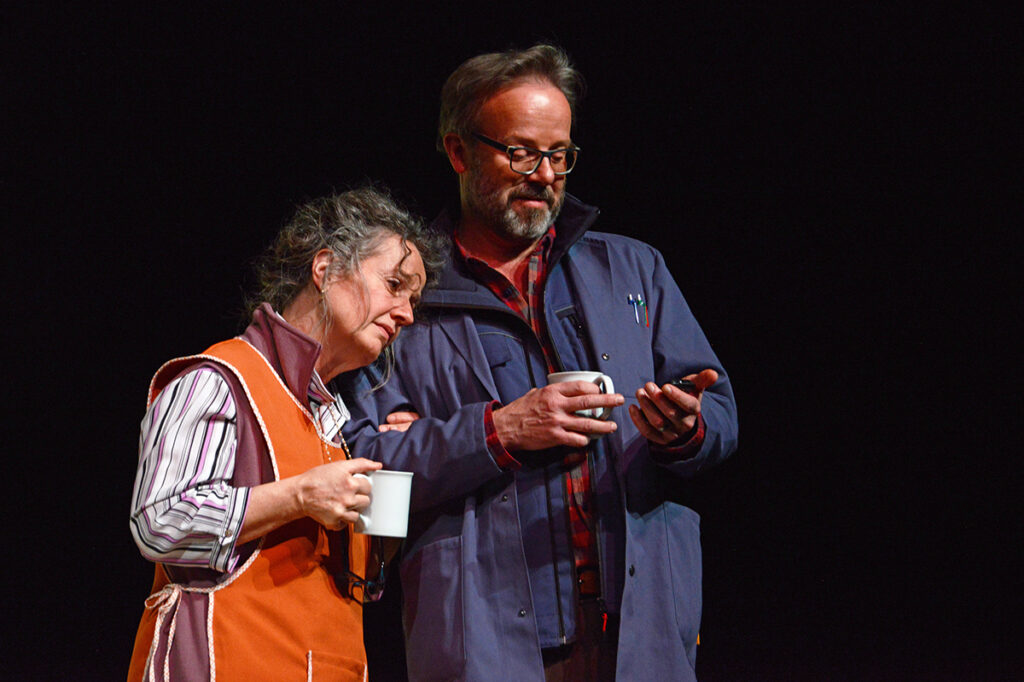
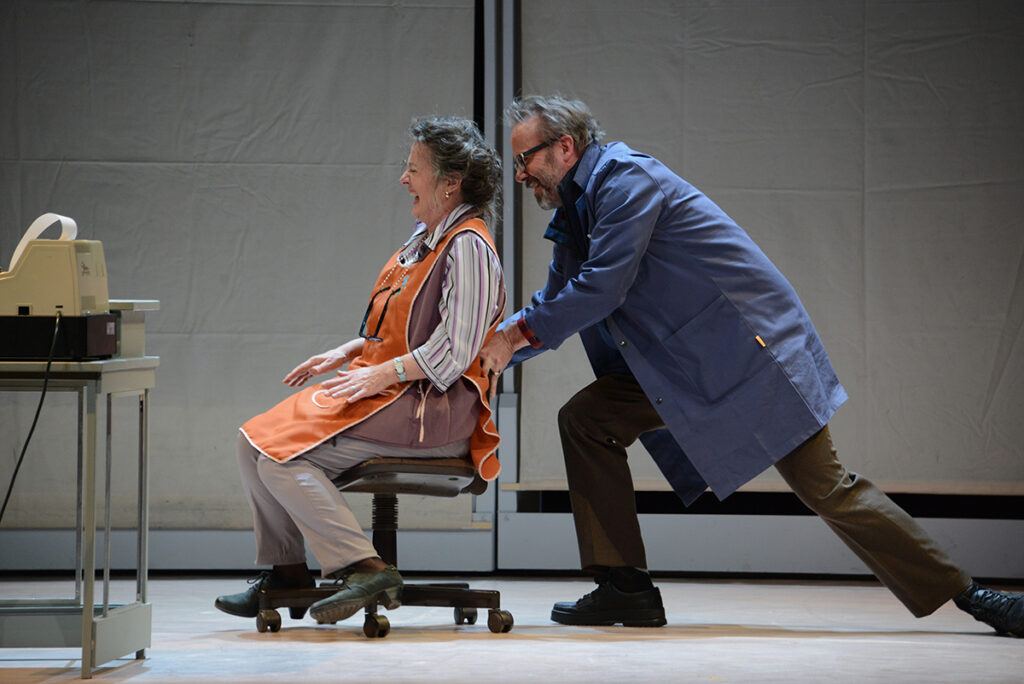
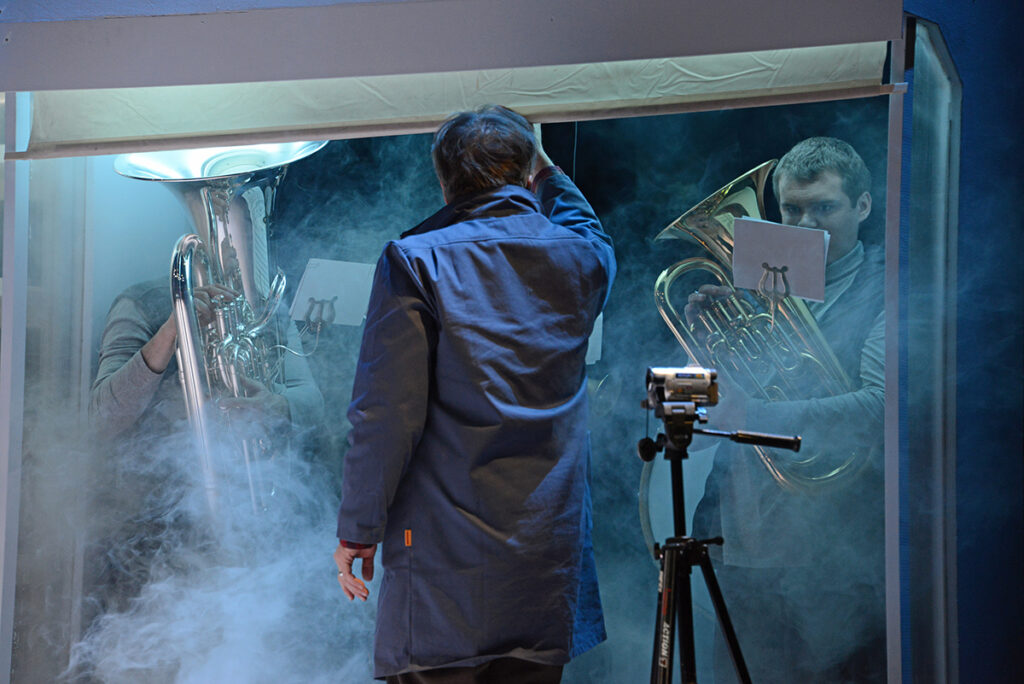
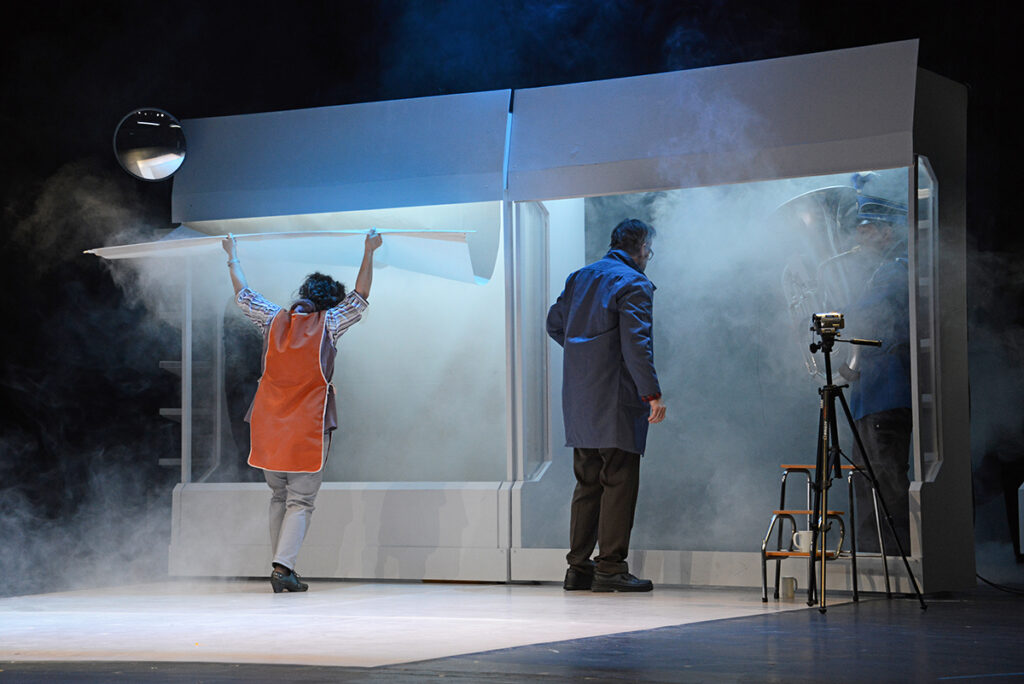
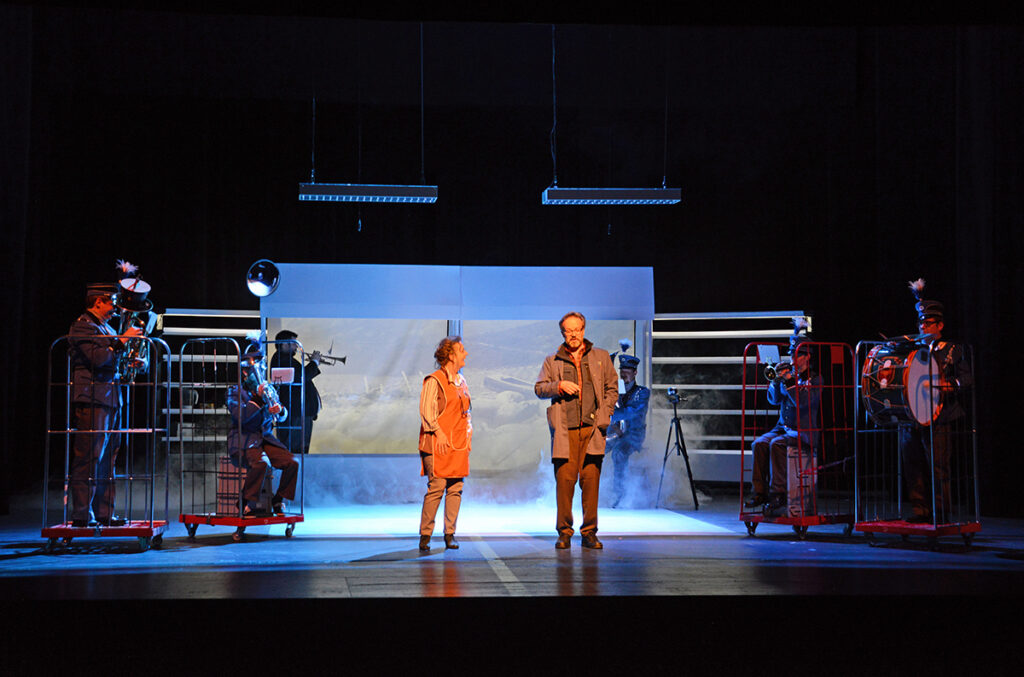
Image credit: Walter Schmid
Press reviews
“That this just-over-seventy-minute evening in Chur is nevertheless well worth seeing is due to the two performers, Peter Jecklin (Balzer) and Barbara Schneider (Marta), who play their way past the textual inconsistencies with a touching, mountain-bred stubbornness and a dry pain of farewell. And it is due to Roman Weishaupt’s precise direction, whose quality reveals itself in countless lovingly expressive details …” - Neue Zürcher Zeitung, Andreas Kläui, on Der Dorfladen, February 2017
“Balzer and Marta briefly dance to a brass-band rendition of ‘When a Man Loves a Woman’, but even this glimmer of tenderness is resignedly abandoned in the final sequence. Farewell hurts. A magnificent play full of brutal honesty, presented in a knife-sharp, simple setting. Not a play for devotees of compulsory entertainment humour, but a major work for the local culture of understanding and for anyone seeking an active engagement with the reality of Graubünden.” - Südostschweiz, on Der Dorfladen, February 2017
“Roman Weishaupt lets Marta and Balzer enter into a tender relationship, allowing them to surprise one another. Like a ghost – or perhaps already a little funeral bell? – a brass band repeatedly passes through the scene. Is this a funeral ritual, or the celebration of a future no one can yet know?
Der Dorfladen is a small episode and does not aspire to be more. Yet it seems as if the ending contains the seed of a new beginning. Quite unexpectedly, the quick-witted Marta – convincingly realised by Barbara Schneider – reveals herself to be the last utopian. She has devised a plan for the resurrection of her life’s work, the village shop. And when Balzer ultimately agrees to this fantastical turn, we sense that the narrowness of the valleys is home not only to deficit and loss. Here, the anarchist closest to heaven is called Marta. She may move away and leave the mountains behind, but others will carry on her work. For suddenly, without anyone noticing, a sound rises from the uniform metallic world of the alpine village band: that of an Arabic oud.” - Daniele Muscionico, Theater der Zeit, April 2017